Gordon Jackson, Trump and the Politics of an Aging Society
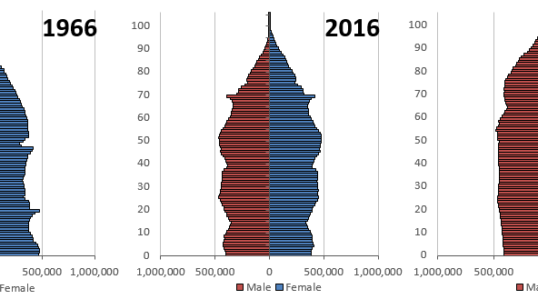
Gordon Jackson, Trump and the Politics of an Aging Society Gerry Hassan Scottish Review, April 1st 2020 1. This weekend it was revealed that Gordon Jackson QC, Alex Salmond’s defence counsel, was filmed on the Edinburgh-Glasgow train talking in an indiscreet and unprofessional manner when his client’s trial was ongoing. Jackson did not paint his client in an edifying light, stating that he was ‘a sex pest’ who was ‘a nasty person to work for’, ‘a nightmare’ and ‘bully’ as well as ‘inappropriate, [an] arsehole, [and] stupid’. Even worse than this, Jackson – a longstanding figure in the Scottish legal
Continue Reading Gordon Jackson, Trump and the Politics of an Aging Society

How we Democratise Scotland’s Future: Challenging the Conceit that ‘There is No Other Way’
How we Democratise Scotland’s Future: Challenging the Conceit that ‘There is No Other Way’ Gerry Hassan Bella Caledonia, December 8th 2011 The concurrent Scottish, British and European debates go on as mostly separate, but interconnected conversations; political and economic parallel universes often seeming oblivious to the existence of each other. The British state sovereigntists wax lyrically as if their moment has come, the Tory Party, in David Cameron’s once revealing remarks, returning to its comfort zone of ‘banging on about Europe’, while Labour slowly shift away from two decades of pro-Europeanism, and the Lib Dems and SNP fall nervously
Fear of a Red Planet: The World in 2050 Today!
Fear of a Red Planet: The World in 2050 Today! Gerry Hassan The Scotsman, January 8th 2011 The future is going to work out fine. Beyond the crash, uncertainties and ‘unknown unknowns’. We have it from no less an authority than HSBC and their ‘The World in 2050’. It is going to be alright for the world, for the West and Britain, which is despite all the problems and competition still going to be a Top Nation in 2050! Forty years on world economic output will have tripled, food and water scarcity will be avoided and Malthusian predictions proved wrong
Continue Reading Fear of a Red Planet: The World in 2050 Today!
Where do we go from here? Part Three: Agency and self-determination, retaking the future without Marx
Where do we go from here? Part Three: Agency and self-determinations, retaking the future without Marx Gerry Hassan and Anthony Barnett Open Democracy, August 5th 2010 This is the third, final, exchange of a wide-ranging three part conversation between Anthony Barnett and Gerry Hassan, touching on the state of British politics and democracy and how the left - weak and disorganised in the face of a resurgent neoliberalism - can propose and build alternatives to the dominant dogmas of the past thirty years. You can read Part I 'The frustrations of British politics' here, and Part 2 'Challenging
Where do we go from here? Part Two: Challenging ‘the Official Future’
Where do we go from here? Part Two: Challenging 'the Official Future' Gerry Hassan and Anthony Barnett Open Democracy, August 4th 2010 This is the second of a wide-ranging three part conversation between Anthony Barnett and Gerry Hassan, touching on the state of British politics and democracy and how the left - weak and disorganised in the face of a resurgent neoliberalism - can propose and build alternatives to the dominant dogmas of the past thirty years. You can read Part I here. Thanks for the message Gerry! How am I supposed to get to sleep without an answer to
Continue Reading Where do we go from here? Part Two: Challenging ‘the Official Future’
Where do we go from here? Part One: The frustrations of British politics
Where do we go from here? Part One: The frustrations of British politics Gerry Hassan and Anthony Barnett Open Democracy, August 2nd 2010 In the first of a wide-ranging three part conversation, Anthony Barnett and Gerry Hassan discuss the state of British politics and democracy and how the left - weak and disorganised in the face of a resurgent neoliberalism - can propose and build alternatives to the dominant dogmas of the past thirty years. Hi Gerry, There is a strange mixture of moods here in political London. There is a Tory right, with Spectatorish leanings, used to
Continue Reading Where do we go from here? Part One: The frustrations of British politics
After the Century of Isms: What is the Future of the Future?
After the Century of Isms: What is the Future of the Future? Gerry Hassan July 7th 2010 1. How Do We Think of the Future? This talk is going to take us on a journey into the future, look at the idea of ‘story’ and ‘the official future’, what it is, why we are living in it, and the possible alternatives. In this it will draw on the work of two futures projects – Scotland 2020 (1) and Glasgow 2020 (2) – which I led working with the UK think tank Demos. 2. The Notion of Futurology The conventional way
Continue Reading After the Century of Isms: What is the Future of the Future?
The Power of Story and Hope Continued
The Power of Story and Hope Continued Gerry Hassan December 9th 2009 A beautiful piece by Libby Brooks in ‘The Guardian’ today on the wonderful work of the Galgael Trust in Govan who build astounding boats – Gaelic longboats or birlinns – and use this to aid young men and women refinding traditional skills, hope and exploring the waterways of the river Clyde (1). Her article also has a very positive mention of my Glasgow 2020 project, coming up for two and half years after it concluded its activities. She states talking about the work and conclusions of Glasgow
The City of Hope: The first step to a better future is imagining one
The City of Hope: The first step to a better future is imagining one Gerry Hassan The Point, November 2nd 2008 Hope is not ignoring … the challenges that stand between you and your dreams. Hope is imagining, and then fighting for, and then working for, struggling for what did not seem possible before. Barack Obama, The Audacity of Hope Thinking of the future is one of the characteristics of being human. It can be seen in the visions of the future of H. G. Wells, Aldous Huxley’s ‘Brave New World’, George Orwell’s ‘1984’ and films such as Tom Cruise’s
Continue Reading The City of Hope: The first step to a better future is imagining one
Scotland in the Global Age: Rethinking Ukania, Europe and the New International Order
Scotland in the Global Age: Rethinking Ukania, Europe and the New International Order Tom Nairn and George Kerevan in conversation This is a longer version of a conversation of which an abridged edition appeared in Gerry Hassan, Eddie Gibb and Lydia Howland (eds), Scotland 2020: Hopeful Stories for a Northern Nation, Demos 2005. Edinburgh October 5th 2004 Dear Tom, I feel like an old soldier parading for the Armistice, medals proudly on show, but just a bit quizzical about what we achieved in the conflict. For you and I are battle-scarred veterans of the Second Devolutionary War. The