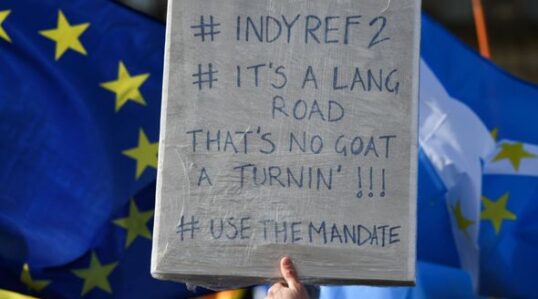
Scotland already is quasi-independence. It is time to own that and act like that
Scotland already is quasi-independence. It is time to own that and act like that Gerry Hassan Sunday National, March 7th 2021 We’ve had a week of huge drama and court politics - from ongoing UK Royal Family splits to the SNP stand-off between Sturgeon and Salmond and their respective camps. The two may compete as theatre, psychodrama and power politics whilst throwing light on gender politics, and the nature and limits of democracy. But there are important differences – with Scotland’s controversy also posing big questions of the SNP, Scottish Government, public institutions, and future of independence. Putting
Continue Reading Scotland already is quasi-independence. It is time to own that and act like that

What has gone wrong with Scottish politics and democracy?
What has gone wrong with Scottish politics and democracy? Gerry Hassan Scottish Review, February 24th 2021 There is a feeling of crisis across Scottish politics and democracy. Partly this is the sense of decay and drift in the SNP with infighting, divisions and lack of trust between senior figures in the party; amplified by the Salmond-Sturgeon implosion. But there is more at play both in the SNP and public life, which points to things not being quite right in politics and democracy. All across political life there is now a hyper-adversarial nature - not just between, but within parties –
Continue Reading What has gone wrong with Scottish politics and democracy?
Trump and the Problem with Sexist Men and Masculinity
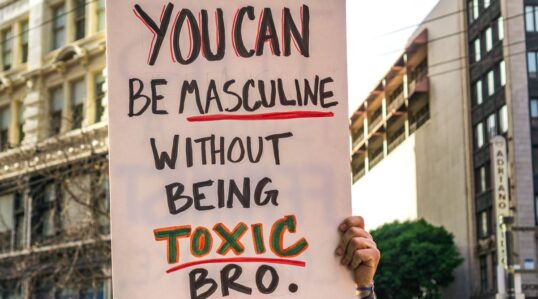
Trump and the Problem with Sexist Men and Masculinity Gerry Hassan Scottish Review, January 20th 2020 Today is the end of the Trump Presidency - four years of chaos, incompetence, hatred and prejudice, fuelled by his constant craving and need for attention and approval. But this is not just a story about one repulsive man in America; it is a global moment and warning. One of the underlying factors in the personality of Trump is his expression of masculinity – boorish, abusive, intolerant, lacking any empathy of others, irresponsible and unreconstructed. He has believed all his adult life that he
Continue Reading Trump and the Problem with Sexist Men and Masculinity
We need to talk about sexism in Scotland
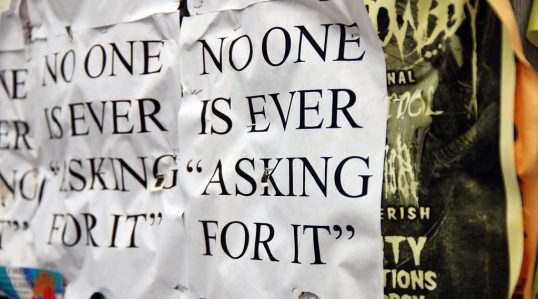
We need to talk about sexism in Scotland Gerry Hassan Scottish Review, August 26th 2020 Last week one story gripped part of Scotland. This was not COVID-19 or the independence majority in two polls. Rather it was the fallout from the Kirsty Wark programme on the Alex Salmond trial. There is no need to or repeat those discussions – although they did bequeath a new word ‘Warkumentary’ which isn’t meant to be a compliment – the substance of which I explored last week. But what has been illuminating amongst all the opinions and passions unleashed has been that, for a
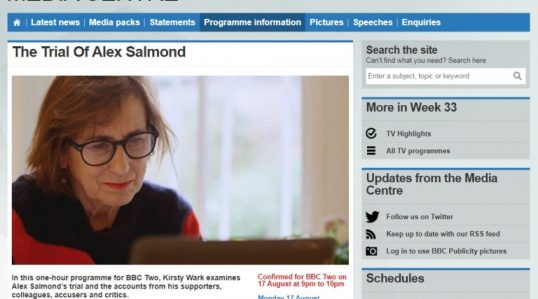
The aftermath of the Alex Salmond trial and Kirsty Wark’s take on Scotland
The aftermath of the Alex Salmond trial and Kirsty Wark's take on Scotland Gerry Hassan Scottish Review, August 19th 2020 Alex Salmond is one of the towering figures of post-war Scottish politics - a politician who dramatically changed the country and his party’s fortunes, taking it into office in 2007, winning majority government in 2011, and taking Scotland close to independence in the 2014 referendum. He has always been a divisive figure: loved by some, hated by others. This division has become increasingly bitter in the aftermath of the trial in March of this year in which he was charged
Continue Reading The aftermath of the Alex Salmond trial and Kirsty Wark’s take on Scotland

The SNP, Salmond and Sturgeon and the limits of court politics
The SNP, Salmond and Sturgeon and the limits of court politics Gerry Hassan Scottish Review, August 5th 2020 The UK is in turbulence. The UK Government has failed us on matters of life and death. Scotland has felt very different, even if on some of the fundamentals of COVID19 it has not been actually that different. At the same time the SNP has soared in the polls, Nicola Sturgeon’s ratings have outshone everyone else and independence has moved into the majority. To some this looks like our future - a slow disentanglement from the UK state. Yet across the world,
Continue Reading The SNP, Salmond and Sturgeon and the limits of court politics
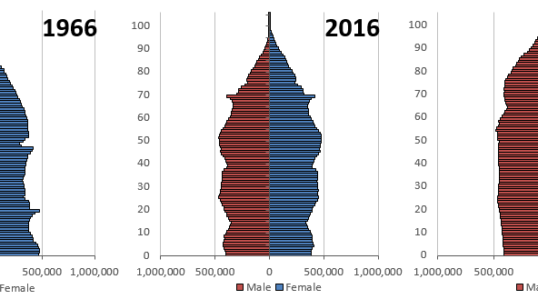
Gordon Jackson, Trump and the Politics of an Aging Society
Gordon Jackson, Trump and the Politics of an Aging Society Gerry Hassan Scottish Review, April 1st 2020 1. This weekend it was revealed that Gordon Jackson QC, Alex Salmond’s defence counsel, was filmed on the Edinburgh-Glasgow train talking in an indiscreet and unprofessional manner when his client’s trial was ongoing. Jackson did not paint his client in an edifying light, stating that he was ‘a sex pest’ who was ‘a nasty person to work for’, ‘a nightmare’ and ‘bully’ as well as ‘inappropriate, [an] arsehole, [and] stupid’. Even worse than this, Jackson – a longstanding figure in the Scottish legal
Continue Reading Gordon Jackson, Trump and the Politics of an Aging Society
We finally have to talk about the Dark Side of Scottish Men
We finally have to talk about the Dark Side of Scottish Men Gerry Hassan Scottish Review, March 11th 2020 Men in public life was always going to become a major subject of conversation in the first part of 2020 with the trial of Harvey Weinstein in New York, and that of former First Minister Alex Salmond in Edinburgh which began this week. Until recent decades Scotland has been a male-dominated society to the extent that it was often never talked about or even recognised as such. Men defined politics, business, the professions, institutional life and our culture – including
Continue Reading We finally have to talk about the Dark Side of Scottish Men
Men Behaving Badly: Boris Johnson, Prince Andrew and Trump
Men Behaving Badly: Boris Johnson, Prince Andrew and Trump Gerry Hassan Scottish Review, November 19th 2019 Boris Johnson in the past week has seen his Tory fortunes soar. This was in a week when Johnson belatedly went and spoke to the people affected by the Yorkshire floods and faced their anger. In the same period, he struggled to answer why he might be ‘relatable’; avoided giving a straight reply to that well-known killer question, ‘how many children do you have?’, and with wider consequences for our politics professed to not know the number of Russian oligarchs who fund the Tory
Continue Reading Men Behaving Badly: Boris Johnson, Prince Andrew and Trump
Independence is about more than an indyref. It is about changing minds and Scotland
Independence is about more than an indyref. It is about changing minds and Scotland Gerry Hassan Bella Caledonia, January 25th 2019 Independence has to be about more than tactics and processes – which has dominated too many conversations since 2014. Independence is about more than an indyref - and in particular, timing, the question asked and how it comes about. This is politics as process and taking the substance for granted. And it is a trap too many independence supporters have fallen into post-2014. The last four plus years have been a strange time in Scottish politics. The democratic spirit
Continue Reading Independence is about more than an indyref. It is about changing minds and Scotland