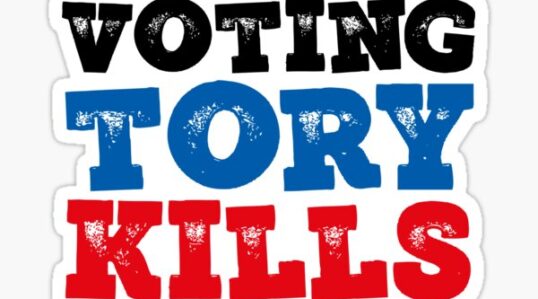
Toryism is bad for your health. Literally it kills
Toryism is bad for your health. Literally it kills Gerry Hassan The National, July 20th 2021 Boris Johnson and his administration have presided over the biggest domestic disaster to befell a UK Government in living memory - arguably since the UK began. There have been terrible calamities before such as Blair and the Iraq war, Eden and Suez, Chamberlain and appeasement, Salisbury and the Boer war. But these are all foreign policy disasters which cost the UK’s reputation severely – and all saw military conflict in which many died including UK citizens. The current Tory Government’s miscalculations, mistakes and arrogances
Continue Reading Toryism is bad for your health. Literally it kills
David Cameron: Britain’s worst post-war Prime Minister so far
David Cameron: Britain’s worst post-war Prime Minister so far Gerry Hassan Scottish Review, September 25th 2019 David Cameron has been on our airwaves and TV screens a lot in the past week punting his autobiography ‘For the Record’. We last saw and heard from ‘call me Dave’ a while ago as he has been away in his shed writing his memoirs and waiting for an appropriate moment in the political storms when they could be published. It was only three and a half years ago that Cameron was UK Prime Minister, resigning the morning after the Brexit vote, and it
Continue Reading David Cameron: Britain’s worst post-war Prime Minister so far
After Cameron, Boris and Corbyn: What will Tomorrow’s Leaders Look Like?
After Cameron, Boris and Corbyn: What will Tomorrow’s Leaders Look Like? Gerry Hassan Scottish Review, July 14th 2016 Leadership in the modern world is cited as the answer to nearly every issue, problem or area of life – from business, to turning round failing organisations, to the success of football clubs. In the last month, political leadership has been all over the news. There has been David Cameron’s rather hasty resignation; the coronation of Theresa May as Prime Minister; and Boris Johnson’s positioning for power, withdrawal from the Tory leadership contest, and then subsequent appointment as Foreign Secretary in May’s
Continue Reading After Cameron, Boris and Corbyn: What will Tomorrow’s Leaders Look Like?
Whatever happens, Britain has already left the building
Whatever happens, Britain has already left the building Gerry Hassan Scottish Review, June 22nd 2016 The UK has already left Europe. It never really joined in any real sense. National debates like this reveals much about the psyche of a country, and how it sees its collective hopes and fears. For one, it illuminates a lot about the ghosts of the past that haunt a country. In the Scottish indyref, for example, a great deal of this focused on the perceived legacy of Thatcherism and deindustrialisation. In this European debate, the ghosts seemingly ever-present are those of the spectre of
Continue Reading Whatever happens, Britain has already left the building
What’s Missing from the the European Referendum?
What's Missing from the European Referendum? Gerry Hassan Sunday Mail, May 22nd 2016 As memory of the Scottish campaign fades, along comes another one: the European referendum. It is like the deregulated chaos of buses – first none, then a stampede! We now have regular referendums. Scotland has had three, as has Wales, Northern Ireland two, and this is the third UK-wide vote. When they were first mooted in the 1970s they were called, particularly by MPs, ‘alien’, ‘unBritish’, ‘undermining of parliamentary sovereignty’, and the sort of things dictatorships do. Since then the referendum has slowly become part of the
Continue Reading What’s Missing from the the European Referendum?
Should I Stay or Should I Go? The Question of Europe, the UK and Scotland
Should I Stay or Should I Go? The Question of Europe, the UK and Scotland Gerry Hassan Scottish Review, April 20th 2016 I am a European. I believe in Europe as an idea. And for all of my life I have felt an affinity and connection with the notion of greater European integration. Now I am not so sure. When I was a child my parents voted in the 1975 referendum against the then EEC. I wasn’t convinced of their argument. The BBC were showing then John Terraine’s ‘The Mighty Continent’ – a history of Europe in the 20th century
Continue Reading Should I Stay or Should I Go? The Question of Europe, the UK and Scotland
What part of Britain is not for sale?
What part of Britain is not for sale? Gerry Hassan Sunday Mail, April 3rd 2016 This week the future of the steel industry moved centrestage, Scottish parties have finally started talking tax, and the Tories version of what they call a ‘national living wage’ came into force. British steel used to lead the world. In 1875 it accounted for 40% of world production. The industry employed 320,000 people in 1971, which has fallen to 24,000 now. It produced 24 million tonnes in 1967, down to 12 million tonnes today. Tata Steel - an Indian company based in Mumbai who bought
The Tory Fantasyland Version of Britain hits the buffers
The Tory Fantasyland Version of Britain hits the buffers Gerry Hassan Sunday Mail, March 20th 2016 George Osborne presented his eighth and potentially last Budget. Bad politics. Dodgy decisions and finances. All leading to Iain Duncan Smith’s sensational resignation sparking bitter Tory divisions. Osborne is a very political chancellor, convinced of his own sure touch which his record doesn’t bear out. A mere 111 days before his budget he presented a glowing Autumn Statement which he has had to tear up and correct downward; by the sum total of £56 billion. Even worse, he is missing the targets which he
Continue Reading The Tory Fantasyland Version of Britain hits the buffers
Fear, Loathing and the Problem of ‘Sovereignty’ in the EU Referendum
Fear, Loathing and the Problem of ‘Sovereignty’ in the EU Referendum Gerry Hassan Scottish Review, March 2nd 2016 After years of second guesses and a rising tide of Europhobia and scare stories, finally the UK faces the certainty of a vote on June 23rd on whether or not it remains a member of the European Union. This will be a debate about so much - about how people see Britain and its future, the English question, and the distinctiveness and autonomy of Scotland – all illustrating the absence of any uniform national British politics. The referendum will be dominated by
Continue Reading Fear, Loathing and the Problem of ‘Sovereignty’ in the EU Referendum
Britain’s Elites can no longer control our politics: The European Vote will change Britain and Scotland Forever
Britain’s Elites can no longer control our politics: The European Vote will change Britain and Scotland Forever Gerry Hassan Bella Caledonia, February 26th 2016 The European referendum is a milestone for Scotland and the UK. It is impossible to understate the historic times we are witnessing - a British establishment and political elite no longer in command of politics and affairs of the state in a way they are used to. The Economist this week, well known for its advocacy of economic liberalism and the maintenance of the union of the UK, acknowledged that this vote was ‘not only the