Not doing the Labour thing is what Labour do
Not doing the Labour thing is what Labour do Scottish National, 30 March 2025 Gerry Hassan This Labour government faces tough choices. Constrained domestically and internationally, they are hampered by the structural weaknesses of the UK economy; the legacy of fourteen Tory years; by Brexit and by Trump, along with the limits of Starmer and Reeves’ agenda. Allowing for all this there is also the inherent conservatism of Labour; its lack of understanding of the British state; and the lack of political touch of this Labour government. Reeves has shown a complete absence of political antenna and sensitivity. Combined with
Continue Reading Not doing the Labour thing is what Labour do
Labour, the Starmer Project, the Battle for Britain and Our Collective Future
Labour, the Starmer Project, the Battle for Britain and Our Collective Future Gerry Hassan Sunday National, 24 November 2024 We are nearly five months into this Labour government - elected after 14 years of Tory government mired in scandal, division and failure which the public were desperate to see the back of. Why then does it already feel as if this government is running to stand still, barely able to articulate what its vision, and nervous about the kind of Britain it wants to bring about? What consequences does this have for challenging the status quo; for healing a broken
Continue Reading Labour, the Starmer Project, the Battle for Britain and Our Collective Future
Anatomy of a Loveless Landslide: Labour’s Victory, the Nature of Britain and Post-Democracy
Anatomy of a Loveless Landside Gerry Hassan Bella Caledonia, 12 July 2024 One week ago the UK underwent a quiet kind of revolution. We drew the curtain on years of Tory chaos and psychodrama. A Labour Government was elected with a large overall majority; the Tories won their lowest ever vote in their history; the SNP suffered a significant reverse; while the Lib Dems, Reform and Greens increased their representation and votes. The UK election was an expression of multi-party politics in voting. It was a very European-style result with five GB-wide parties competing besides SNP and Plaid, along with
Barbarism Begins at Home: The Continuing Great Moving Right Show and War on Democracy
Barbarism Begins at Home Gerry Hassan Bella Caledonia, 2 July 2024 Across the West politics are fractured, divisive, and raise more questions than answers. Biden vs. Trump; the authoritarian US Supreme Court extending Trump’s Presidential immunity; the march of the far-right in the French legislative assembly elections; the UK election and emptiness of the mainstream – a trend reflected by Andrew Hindmoor in Haywire: A Political History of Britain since 2000 as ‘the growth of modern miserabilism’ and as evidence that ‘the country is in decline and everything is getting worse.’ Everywhere the forces of the populist right are either
Scotland’s progressive politics needs some championing
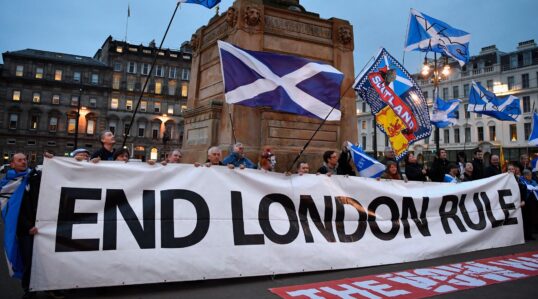
Scotland’s progressive politics needs some championing Gerry Hassan The National, 30 November 2021 Scotland’s progressive values have defined much of our politics - the first 20 years of devolution, majority opposition to Thatcherism, and the independence debate. And yet for all their wide support they need attention, nurturing, and championing. On Saturday Plaid Cymru voted to endorse a deal with Welsh Labour for a co-operation agreement in government covering 46 areas including free school meals for primary children, free childcare, and tackling the second homes crisis. Adam Price, Plaid leader, said that this renewed “trust in a new democracy with
Continue Reading Scotland’s progressive politics needs some championing
The lessons and warning from New Labour
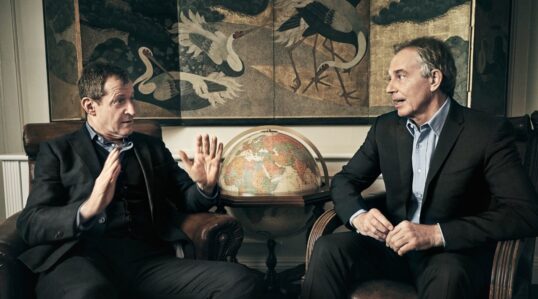
The lessons and warning from New Labour Gerry Hassan The National, 26 October 2021 The spectre of Tony Blair, Gordon Brown and New Labour may seem a long time ago given the mess the UK is in, but their period of dominance still casts a long shadow over British politics and offers lessons and warnings for the present. The new BBC five-part series: “Blair and Brown: The New Labour Revolution” is a major political documentary with all the main players - including Blair and Brown, Alastair Campbell and Peter Mandelson - present and correct. This is “big beast”, Westminster-focused, insider
Labour’s problems are about much more than Keir Starmer
Labour’s problems are about much more than Keir Starmer Gerry Hassan The National, 28 September 2021 Labour meet in Brighton this week for another conference in opposition and in the wilderness, with clear evidence of being collectively bewildered and confused. Not only that but Keir Starmer’s leadership is openly being questioned across the party – not just from the Corbynite left but on the centre and right from where he has drawn most support until now. No one seems sure what Starmer stands for, or even if he has the real skills needed to be a leader. Yet
Continue Reading Labour’s problems are about much more than Keir Starmer
A Tour Inside Gordon Brown’s Britain
A Tour Inside Gordon Brown’s Britain Gerry Hassan Scottish Review, November 25th 2020 Gordon Brown in recent times has increasingly recognised that something is wrong, even rotten, in the state of Britain, regularly talking about ‘a dysfunctional UK’. This is part of Brown’s continual manoeuvres post-2014 to have a say in the future of Britain’s constitutional arrangements and to make the case that the status quo increasingly ill-serves the nations and regions of the UK. Thus it comes as no surprise that he has taken pen to paper and written a substantial New Statesman essay that makes his case of
What comes after Richard Leonard for Scottish Labour? Time for an Independent Labour Party
What comes after Richard Leonard for Scottish Labour? Time for an Independent Labour Party Gerry Hassan Scottish Review, September 9th 2020 Scottish Labour once seemed to have an ironclad grip on Scottish politics, winning election after election, and seeing off opponents whether it was Tories, SNP or the occasional Lib Dem. For two political generations - from 1959 to 2007 - Labour won every single nationwide election for Westminster in seats, and from 1964 in votes; and in the first two Scottish Parliament elections to 2007. It became defined as the party of power, the insider class and hence,
History in the Making: The End of the Era of Neo-liberalism – in the UK and Globally
History in the Making: The End of the Era of Neo-liberalism – in the UK and Globally Gerry Hassan Scottish Review, November 27th 2019 This, we are continually told, is meant to be a seismic, even historic election - usually referring to the fundamental implications of Brexit. What is seldom addressed is that this election also signifies far-reaching change in another aspect of politics. This is the confirmation of the jettisoning of the economic assumptions which have defined UK politics for the past 40 years - sometimes described as neo-liberalism. This shift is a continuation and reinforcement of a change